
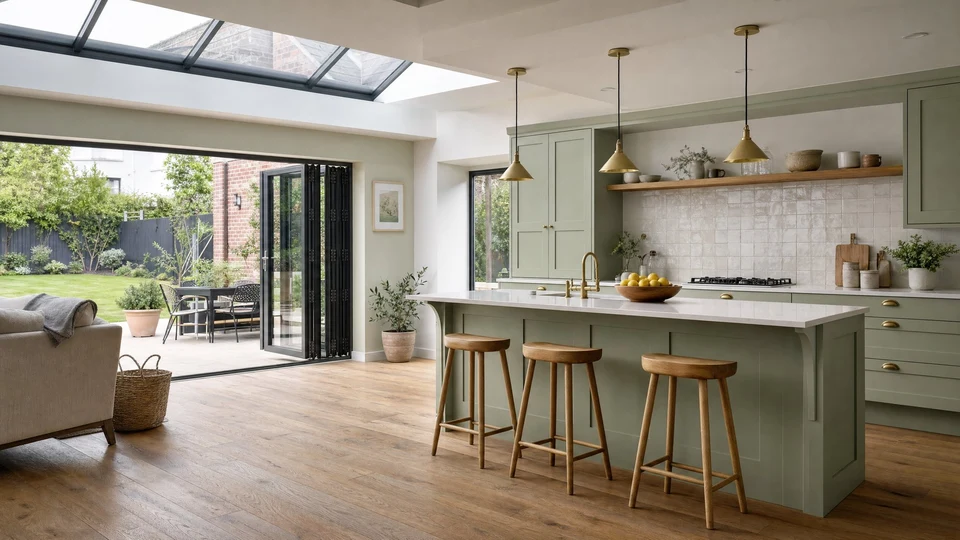
Decorating a home in Altrincham & Hale: colours, styles and local tips
Compare a sample beside the material that will stay: brick outside, stone on a hearth or the flooring indoors.

Written by Ali Vahidi · 6 min read
What colours suit homes in Altrincham and Bowdon?
Compare a sample beside the material that will stay: brick outside, stone on a hearth or the flooring indoors. A warm neutral can read pink next to red brick. Move the sample between the window and the darkest wall before choosing the trim colour.
Period and contemporary rooms
In a period room, test a wall colour beside the cornice and the floor. In a newer extension, take the same board to the glazing and the kitchen units. Daylight and reflected colour can make one shade look like two. Decide where a colour change lands when both rooms are visible through the same opening. An inside corner often gives a clearer stopping point than a line across an uninterrupted wall.
Coordinate the finishes
Give each room a short schedule listing walls, ceiling, doors, frames and skirting. If an interior designer supplies a palette, record the manufacturer, colour reference, product and sheen together. Ask who approves any substitution. Two near-matching neutrals may work on opposite sides of the home but look accidental where a new frame meets an existing painted door.
Stage a family home
Group rooms by the facilities the household needs to keep using. Leave a bedroom accessible and identify somewhere for furniture before work begins. Consider the front door separately, particularly if access or external colour is subject to an approval. At handover, save the colour references alongside labelled photographs. A room name alone becomes ambiguous after furniture or room use changes.
Take the sample to the difficult corner
Start in the position where you expect the colour to work least well. In a north-facing recess this might be beside a dark floor. In a room with a large window it might be the wall opposite a bright reflection. Use a sample large enough to see beside the skirting without most of the view being taken up by the old colour. Carry it into the adjoining room and look back through the opening. If two samples are competing, cover one at a time before making notes. Side-by-side comparisons can exaggerate a small difference that disappears when a whole wall is seen alone.
Compare products on a pair of boards
Prime two matching pieces of sample material in a way suitable for the intended surface. Apply the candidate products according to their instructions and label the backs with the product as well as the colour. Hold them side by side at the landing window and at the darkest point in the hall. Then rotate each board. A surface that looks identical head-on may show a noticeably different reflection when lit from the side. Once the specified cure time has passed, follow the recommended cleaning method on half of each board. Inspect it again in side light to see whether cleaning changes its appearance.
Write a finish schedule that survives a touch-up
A schedule entry such as “white trim” is too broad when there are several whites and two sheen levels in the house. Use a separate line for the landing skirting, door leaves, architraves and handrail if their product or preparation differs. Record the maker, range, shade, base and sheen as printed on the label. For the wall beside the handrail, include how far the finish runs around the corner. Keep a photograph of the junction. Later, if an isolated touch-up leaves a noticeable patch, that record helps decide which natural break to use for recoating and where a different product begins.
Look at reflected light
Stand near a window and look along a wall rather than straight at it. Reflected light makes raised repairs, roller texture and brush marks more visible. A flatter finish reduces the strength of those reflections but does not remove the underlying defect. Decide how much preparation the wall needs before using a lower sheen to soften its appearance. Inspect a sample once it has dried according to the product guidance.
Match the surface to its use
A ceiling above a quiet bedroom, a stair wall touched every day and a painted window board have different requirements. For each surface, note how often it will be touched, wiped or exposed to condensation. Then compare exact product specifications. The words matt, eggshell and satin refer primarily to appearance; two products with the same sheen description can offer different resistance to cleaning.
Choose wall and trim finishes together
Use two sample boards where the wall meets the skirting or frame. The same colour can appear subtly different in different finishes, especially in a dark hallway. A contrast can help an ornate profile stand out, while matching the shade can make joinery feel part of the wall. Compare the samples upright under the room’s evening lamps. Keep a record of both products, not just the common colour name.
Plan for cleaning and future repair
Ask how long the product must cure before cleaning and which cleaning method is appropriate. A touch-up on a wall lit from the side can show a different sheen even when the colour is correct. Save the product and batch information and note which wall was painted. For a prominent area, a complete coat to a natural corner sometimes gives a more consistent result than a small isolated patch.
Work out the geometry before buying moulding
Take a wall 3.2 metres wide with an opening towards one end. The useful dimension is the run between the architrave and the return, not the full wall width. Measure at the top and bottom of the proposed panels. Draw the outer margins first and subtract the widths of all uprights before dividing the remainder into bays. Tape two different layouts on the wall. A mathematically equal bay can look awkward if a socket sits on the stile or the last bay disappears behind a curtain. View the tape from the door and from the usual seated position before settling the layout.
Further reading: Dulux guide to paint finishes.
Frequently asked questions
How long does it take to redecorate a family home?
Plan around the number of rooms released at once, preparation and drying between coats. For a family home, request a sequence showing when bedrooms, stairs and the kitchen return to use.
Which paint brands do you recommend?
Choose a product for its substrate and the finish you can maintain. Compare two physical samples in the room and record the precise product as well as the shade.
Do I need permission to change my front door colour?
Before booking exterior work, ask the local planning authority about the specific address and proposed change. Give the decorator the confirmed scope so the quotation matches it.
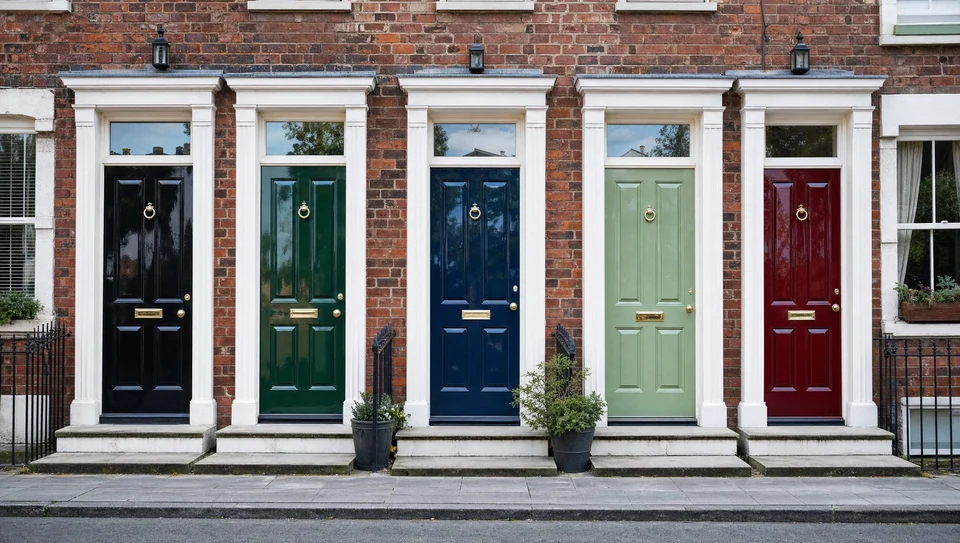 The 8 most popular front door colours in Manchester
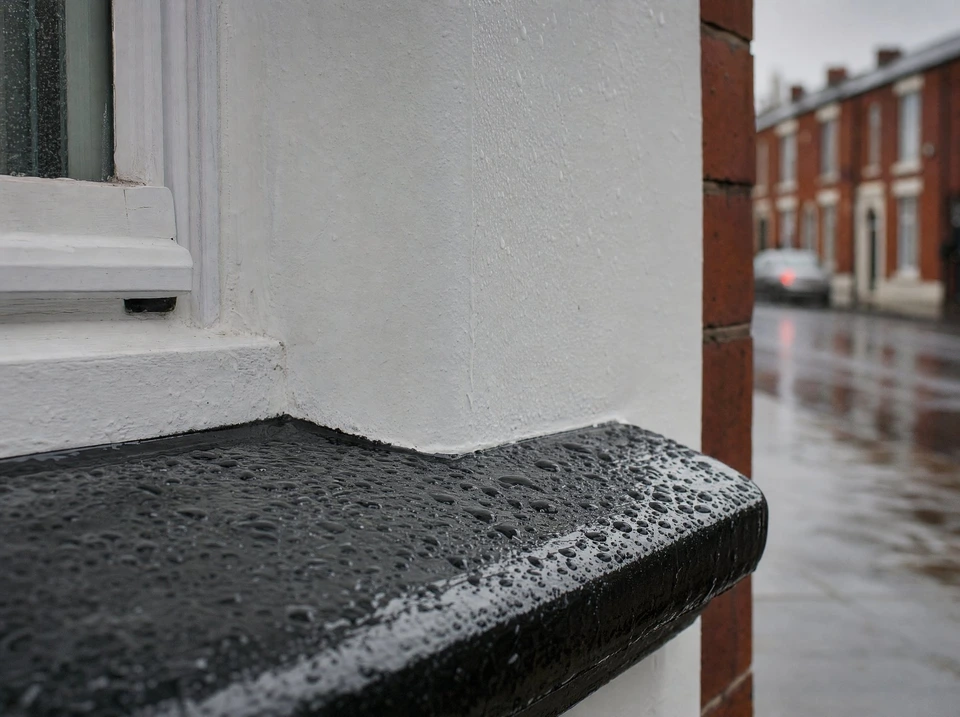 When is it too wet or cold to paint outside?
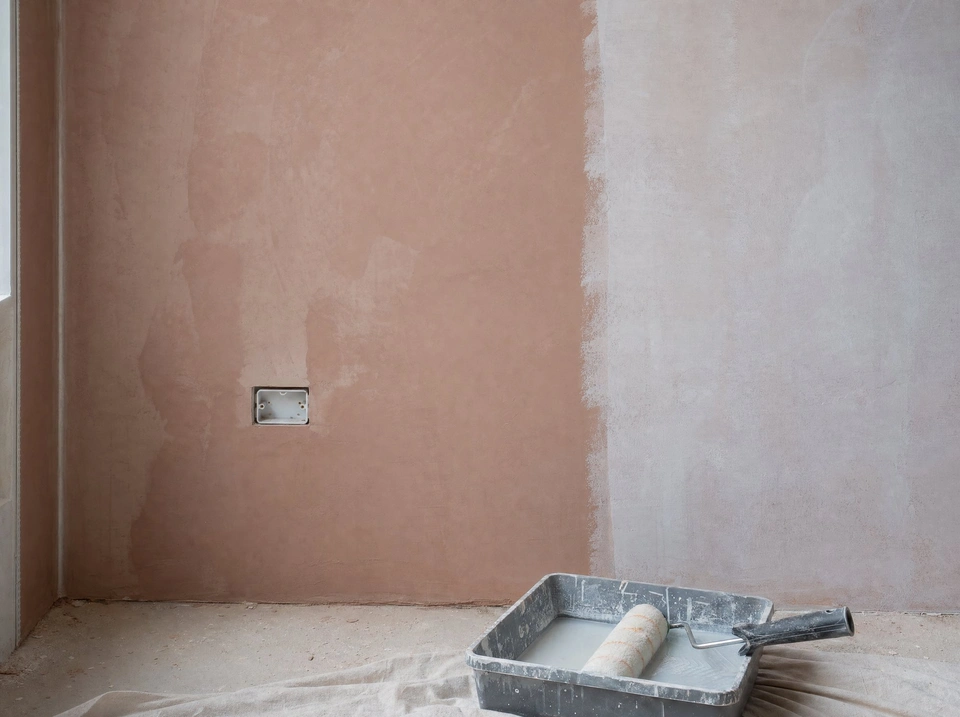 How long should new plaster dry before painting?