
Decorating a Chorlton terrace: colours, front doors and small spaces
Carry one wall colour from the entrance to the landing to soften the breaks in a narrow terrace.
Written by Ali Vahidi · 6 min read
How do you make a Chorlton terrace feel bigger with paint?
Carry one wall colour from the entrance to the landing to soften the breaks in a narrow terrace. Sample it under the hallway lamp as well as daylight from the front door. Pick a washable finish for the wall beside the stairs, where hands and bags brush past.
Follow the view from the front door
In a narrow terrace, the far end of the hall often receives quite different light from the entrance. Place identical samples in both locations. Try continuing the wall colour around the turn of the stairs. If you prefer contrasting joinery, sample an entire section of architrave beside the wall. A thin stripe on a colour card gives little indication of how often that contrast will repeat along the hall.
A hardworking hallway
Look for bag marks at shoulder height and scuffs beside the bottom stair. Choose a finish with a cleaning specification suited to those areas. A matt finish can conceal shallow irregularities in grazing light, but products differ in how readily they can be cleaned. Test the selected paint on a sample board, allow the stated cure time and try the cleaning method you expect to use.
Access and the front step
Agree when the door can stand open, where deliveries can stop and how residents will reach the stairs between coats. Bring the door sample outside and check it alongside the brick, sill and letter plate. If the frame is staying white, include that white on the board. Book the door separately if its drying time would conflict with locking up for the evening.
Take the sample to the difficult corner
Start in the position where you expect the colour to work least well. In a north-facing recess this might be beside a dark floor. In a room with a large window it might be the wall opposite a bright reflection. Use a sample large enough to see beside the skirting without most of the view being taken up by the old colour. Carry it into the adjoining room and look back through the opening. If two samples are competing, cover one at a time before making notes. Side-by-side comparisons can exaggerate a small difference that disappears when a whole wall is seen alone.
Compare products on a pair of boards
Prime two matching pieces of sample material in a way suitable for the intended surface. Apply the candidate products according to their instructions and label the backs with the product as well as the colour. Hold them side by side at the landing window and at the darkest point in the hall. Then rotate each board. A surface that looks identical head-on may show a noticeably different reflection when lit from the side. Once the specified cure time has passed, follow the recommended cleaning method on half of each board. Inspect it again in side light to see whether cleaning changes its appearance.
Write a finish schedule that survives a touch-up
A schedule entry such as “white trim” is too broad when there are several whites and two sheen levels in the house. Use a separate line for the landing skirting, door leaves, architraves and handrail if their product or preparation differs. Record the maker, range, shade, base and sheen as printed on the label. For the wall beside the handrail, include how far the finish runs around the corner. Keep a photograph of the junction. Later, if an isolated touch-up leaves a noticeable patch, that record helps decide which natural break to use for recoating and where a different product begins.
Look at reflected light
Stand near a window and look along a wall rather than straight at it. Reflected light makes raised repairs, roller texture and brush marks more visible. A flatter finish reduces the strength of those reflections but does not remove the underlying defect. Decide how much preparation the wall needs before using a lower sheen to soften its appearance. Inspect a sample once it has dried according to the product guidance.
Match the surface to its use
A ceiling above a quiet bedroom, a stair wall touched every day and a painted window board have different requirements. For each surface, note how often it will be touched, wiped or exposed to condensation. Then compare exact product specifications. The words matt, eggshell and satin refer primarily to appearance; two products with the same sheen description can offer different resistance to cleaning.
Choose wall and trim finishes together
Use two sample boards where the wall meets the skirting or frame. The same colour can appear subtly different in different finishes, especially in a dark hallway. A contrast can help an ornate profile stand out, while matching the shade can make joinery feel part of the wall. Compare the samples upright under the room’s evening lamps. Keep a record of both products, not just the common colour name.
Plan for cleaning and future repair
Ask how long the product must cure before cleaning and which cleaning method is appropriate. A touch-up on a wall lit from the side can show a different sheen even when the colour is correct. Save the product and batch information and note which wall was painted. For a prominent area, a complete coat to a natural corner sometimes gives a more consistent result than a small isolated patch.
A door with two quite different faces
Imagine an entrance with a red brick surround outside and a pale hall inside. Start with the door closed and decide which colour belongs to each room. Open it halfway and look at the edges visible from each side. Record that decision in the specification along with the frame, threshold and fanlight. A single line reading “paint front door” leaves all four open to interpretation. If the inner face is outside the work, photograph it before the furniture comes off. Bring the chosen sample back to the actual opening when the weather changes. A navy that reads clearly in direct light can look almost black beneath a deep canopy.
Further reading: Dulux guide to paint finishes.
Frequently asked questions
What colour makes a small room look bigger?
Test a pale or mid-tone shade on two adjacent walls. Carrying it through the doorway can soften the visual break between rooms. Compare the samples under both daylight and evening lamps.
Which finish is best for hallways?
In a narrow hallway, compare cleanable wall finishes and a durable trim finish. Test the sheen at an angle from the front door, where reflections and uneven plaster show most clearly.
How long does a terrace hallway take to paint?
Measure the full height and length, count doors and include the staircase return. Timing depends on repairs, access and drying, especially if the hallway remains the only route upstairs.
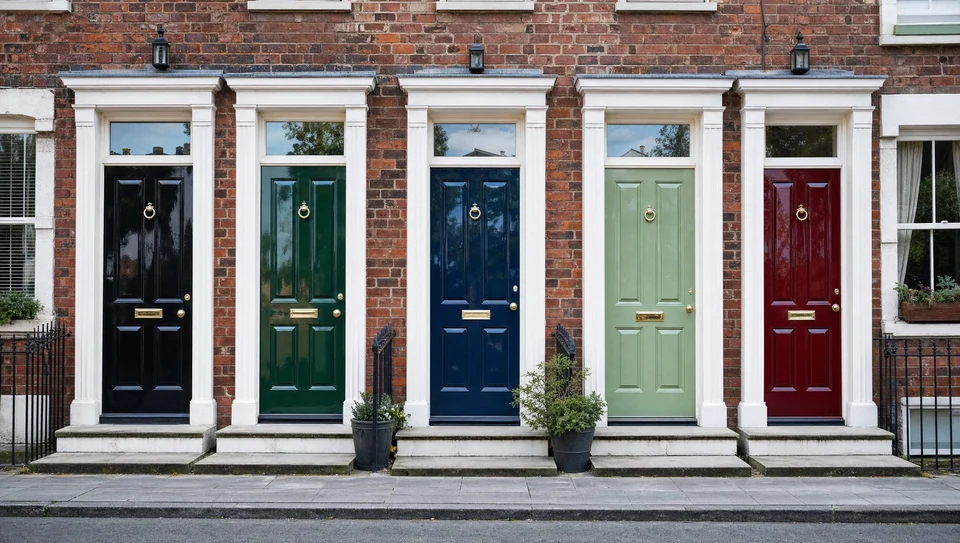 The 8 most popular front door colours in Manchester
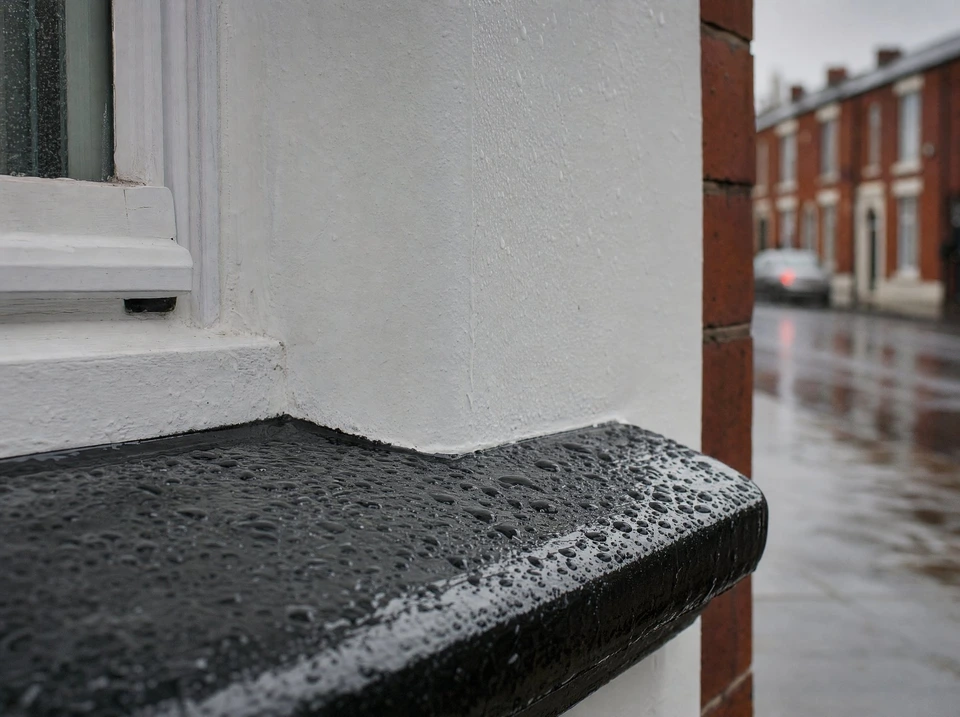 When is it too wet or cold to paint outside?
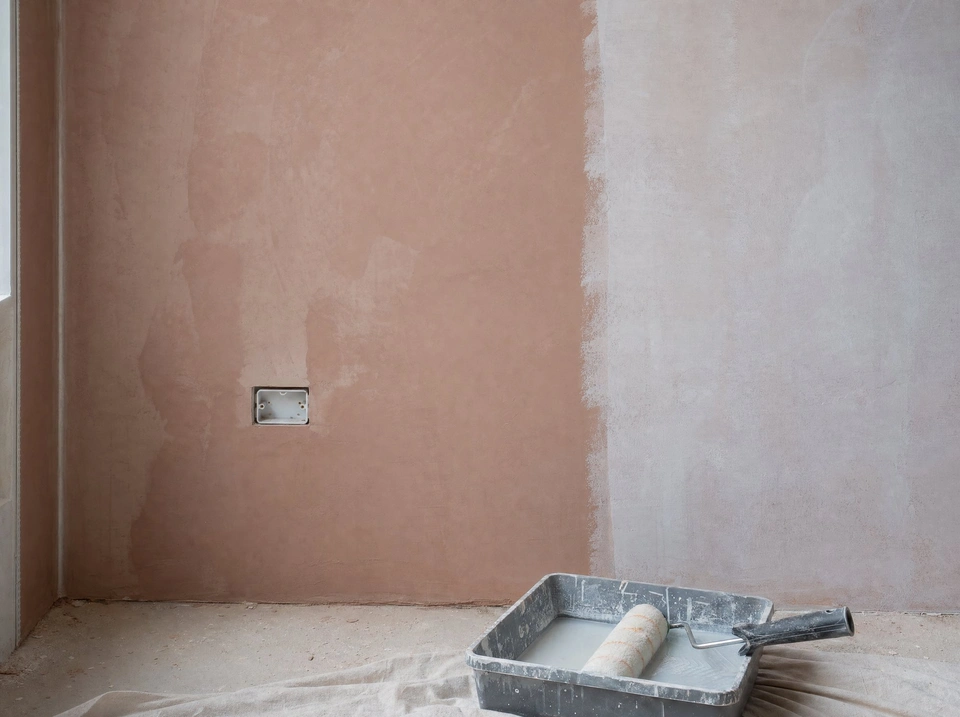 How long should new plaster dry before painting?